
Do you often wonder if taking a nap during the day is ruining your sleep at night? You’re not alone.
Many people struggle with feeling tired but worry that napping might make it harder to fall asleep later. What if there was a simple way to know whether your midday rest is helping or hurting your nighttime sleep? Keep reading to discover surprising facts about napping and how it could be affecting your energy and sleep quality.
Understanding this could change the way you recharge your body every day.

Quick Navigation
Napping And Night Sleep Connection
Napping has a clear link to how well you sleep at night. It can either help or hurt your nighttime rest. Knowing this connection helps you decide the best way to use naps. Sleep works in cycles, and naps can change these cycles. This change affects how deep and restful your night sleep will be.
Some naps refresh your brain and body. Others can make it harder to fall asleep later. The length and timing of a nap make a big difference. Learning how naps fit into your sleep cycles can improve your overall sleep quality.
How Naps Affect Sleep Cycles
Sleep cycles include light sleep, deep sleep, and REM sleep. Naps can interrupt these cycles. A nap during deep sleep might make you feel groggy afterward. Short naps usually avoid deep sleep, so you wake up refreshed. Longer naps might cause you to enter deep sleep, leading to sleep inertia. This grogginess can last for a while and affect your night sleep.
When naps are too long or late in the day, they can delay your body’s sleep schedule. This delay makes falling asleep at night harder. Short naps help your body rest without disturbing night sleep cycles. Understanding these effects helps you nap wisely.
Short Vs Long Naps Impact
Short naps last between 10 and 30 minutes. They boost alertness and energy without causing sleep inertia. These quick rests refresh your brain and improve mood. They usually do not affect nighttime sleep.
Long naps last over 30 minutes and can go up to 90 minutes or more. These naps allow you to enter deep and REM sleep. Waking up from deep sleep can cause grogginess and confusion. Long naps might reduce your sleep drive, making it harder to fall asleep at night.
Choosing short naps over long ones helps maintain a healthy sleep cycle. Avoiding naps late in the afternoon also protects your night sleep quality.
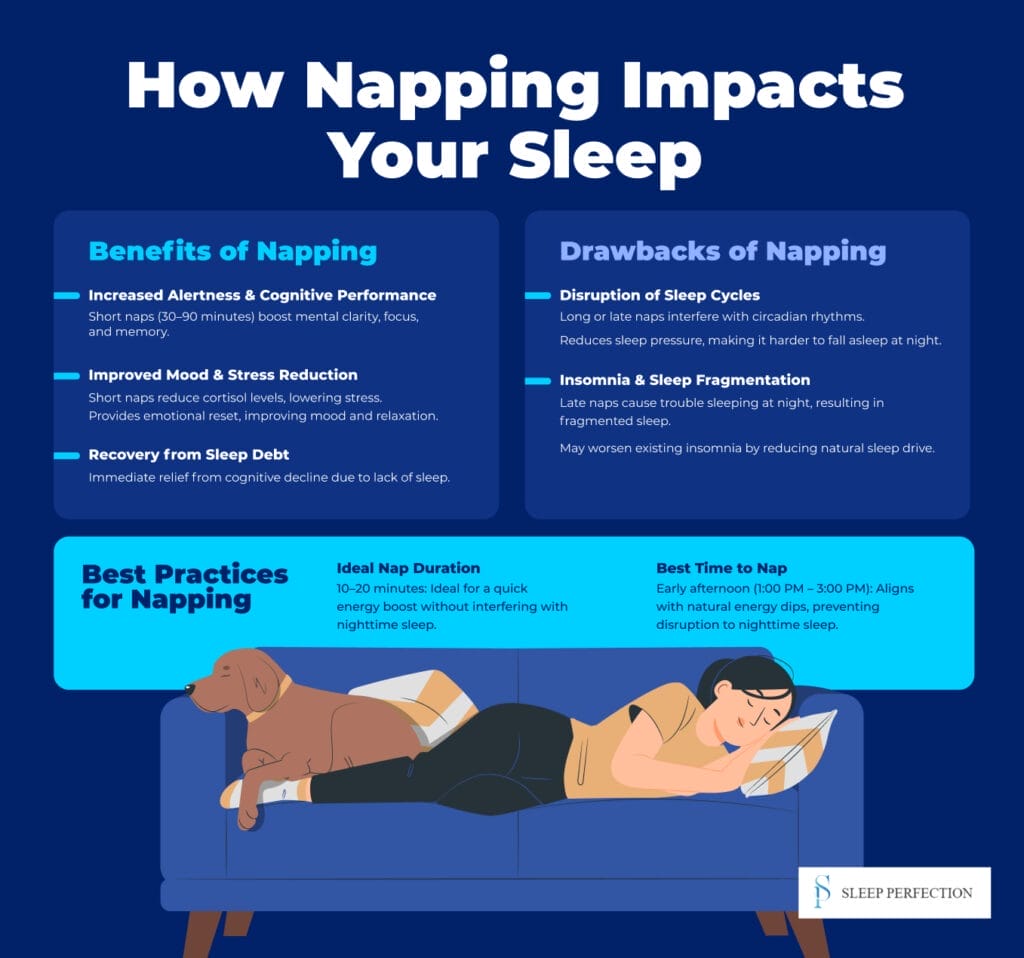
Benefits Of Napping
Napping can bring many good effects to your daily life. Short naps help your body and mind recover from tiredness. They give you a quick rest that improves how you feel and work. Knowing these benefits can help you use naps well without hurting your night sleep.
Here are two main ways naps can help you during the day.
Boosting Alertness And Mood
A nap can quickly make you feel more awake. Even a 10-20 minute rest improves alertness. You notice better focus and less sleepiness after a nap. Naps also help lift your mood. Feeling tired often makes people feel grumpy or sad. A short nap can reduce these feelings and bring more calm and happiness.
Enhancing Cognitive Performance
Napping improves how your brain works. It helps with memory and learning new things. After a nap, you can solve problems better. Your thinking becomes clearer and faster. This boost lasts for several hours. It is useful for students, workers, or anyone needing mental sharpness.
Potential Downsides Of Napping
Napping has clear benefits, but it also comes with some risks. Understanding the potential downsides helps make better choices about when and how long to nap. Poorly timed naps can affect your energy and night sleep. Let’s explore some common issues linked to napping.
Sleep Inertia And Grogginess
Sleep inertia means feeling sleepy and slow after waking from a nap. It often happens if you nap too long or wake up during deep sleep. This grogginess can last for several minutes or even longer. It makes it hard to focus and lowers productivity. Short naps under 30 minutes usually reduce sleep inertia.
Nighttime Sleep Disruption
Napping late in the day can make it harder to fall asleep at night. This delay can shorten your total sleep time. Poor nighttime sleep leads to tiredness the next day. Regular long naps may also change your body’s sleep cycle. This change can cause ongoing problems with your nighttime rest.

Ideal Nap Timing And Duration
Napping can refresh your mind and body. But the timing and length of naps matter. Naps taken at the wrong time or for too long can disturb nighttime sleep. Understanding the ideal nap timing and duration helps improve your overall rest. This section covers the best times to nap and how long naps should last.
Best Time For A Nap
The best time to nap is early afternoon. Usually, between 1 p.m. and 3 p.m. is ideal. This matches the natural dip in energy most people feel after lunch. Napping during this window avoids interfering with your night sleep. Avoid late afternoon or evening naps. They can make it harder to fall asleep at night.
Recommended Nap Lengths
Short naps of 10 to 20 minutes work well. These quick naps boost alertness and mood without causing grogginess. A 30-minute nap may cause sleep inertia, making you feel tired. Longer naps of 60 to 90 minutes allow a full sleep cycle. These naps help with memory and creativity. Avoid naps longer than 90 minutes. They can disrupt your nighttime sleep schedule.
Individual Differences In Napping
Napping affects people in different ways. Some feel refreshed after a short nap, while others find it hard to sleep at night. Understanding these differences helps to see if napping is good or bad for your sleep at night. Several factors like age, lifestyle, and health play a role in how napping impacts nighttime rest.
Age And Lifestyle Factors
Age changes how naps affect your sleep. Young children need naps to grow and recharge. Older adults often nap more, but this may signal less deep sleep at night. Busy lifestyles can also change nap habits. People with stressful jobs or irregular schedules may take naps to catch up on lost rest. Short naps can boost alertness, but long naps might make falling asleep harder at night.
Sleep Disorders And Napping
Sleep problems change how naps work. People with insomnia or sleep apnea may nap during the day to ease tiredness. This can make it harder to sleep well at night. For some, naps help reduce sleep debt and improve mood. Still, naps might disrupt natural sleep patterns in others. Knowing your sleep health helps decide if naps support or harm your nighttime rest.
Tips For Healthy Napping
Napping can boost energy and focus during the day. To make naps helpful, follow some easy tips. Healthy naps improve mood without hurting night sleep. Small changes make naps more restful and safe.
Creating A Restful Nap Environment
Choose a quiet spot free from noise. Dim the lights or use an eye mask. A cool room helps the body relax. Use a comfortable chair or bed to lie down. Keep the space tidy to avoid distractions. These steps help the mind and body rest faster.
Avoiding Common Nap Mistakes
Limit naps to 20-30 minutes to prevent grogginess. Do not nap too late in the day. Late naps can delay falling asleep at night. Avoid napping when feeling very tired from lack of sleep. Long naps confuse the body clock. Stick to regular nap times for best results.
Frequently Asked Questions
Does Napping Affect Nighttime Sleep Quality?
Napping can impact nighttime sleep if done late or too long. Short naps (20-30 minutes) early in the day usually won’t disrupt your night’s rest. Avoid naps close to bedtime to maintain good sleep quality.
How Long Should A Nap Be For Best Rest?
The ideal nap length is 20 to 30 minutes. This duration boosts alertness without causing sleep inertia or affecting nighttime sleep. Longer naps can lead to grogginess and may interfere with your main sleep schedule.
Can Napping Help If I Have Sleep Deprivation?
Yes, napping can partially recover lost sleep and improve alertness. However, it should not replace consistent nighttime sleep. Short, early naps are best to avoid disrupting your regular sleep cycle.
Is Napping Bad For People With Insomnia?
For some with insomnia, naps can worsen nighttime sleep difficulties. Napping reduces sleep pressure, making it harder to fall asleep at night. It’s best to limit or avoid naps if you struggle with insomnia.
Conclusion
Napping can affect your night sleep, but it depends on how you nap. Short naps early in the day usually do not cause problems. Long or late naps might make falling asleep harder. Listen to your body and keep naps short.
Good sleep habits at night matter most. Rest well, and your nights will improve. Balance is the key for healthy sleep. Napping is not bad if done right. Choose nap times carefully to protect your night rest.

