
As an Amazon Associate I earn from qualifying purchases.
Do you wake up every morning feeling stiff, sore, or achy? That nagging pain might not just be a random annoyance—it could be your sleep posture working against you while you rest.
The way you position your body at night has a powerful impact on how you feel when you open your eyes. Imagine turning your bed into a pain-free zone simply by changing how you lie down. You’ll discover exactly how poor sleep posture causes morning pain and what simple steps you can take to wake up refreshed and pain-free.
Keep reading—your body will thank you.

Quick Navigation
Link Between Sleep Posture And Morning Pain
Poor sleep posture is a common cause of pain after waking up. The way you position your body during sleep affects your muscles and joints. Sleeping in an awkward pose puts stress on certain body parts. This stress leads to stiffness and discomfort in the morning. Changing sleep posture can reduce or prevent this pain. Understanding the connection helps improve sleep quality and reduce aches.
Common Pain Areas
Many people wake up with pain in the neck and shoulders. These areas are vulnerable to strain from poor posture. Lower back pain is also common after sleeping in the wrong position. Hip and knee pain can occur when legs are not properly supported. Wrist and hand pain may result from awkward arm placement. These common pain spots show where posture causes the most problems.
Impact On Muscles And Joints
Muscles can become tense and tight during bad sleep posture. This tension reduces blood flow and causes soreness. Joints may get compressed or twisted, leading to inflammation. Over time, poor posture can cause joint stiffness and damage. Restoring natural alignment eases muscle tension and joint pressure. Good sleep posture supports recovery and comfort during rest.
Types Of Poor Sleep Postures
Poor sleep posture often leads to morning pain. Different types of bad sleeping positions cause stress on your body. Understanding these types helps identify why pain occurs. Here are common poor sleep postures that cause discomfort.
Sleeping On The Stomach
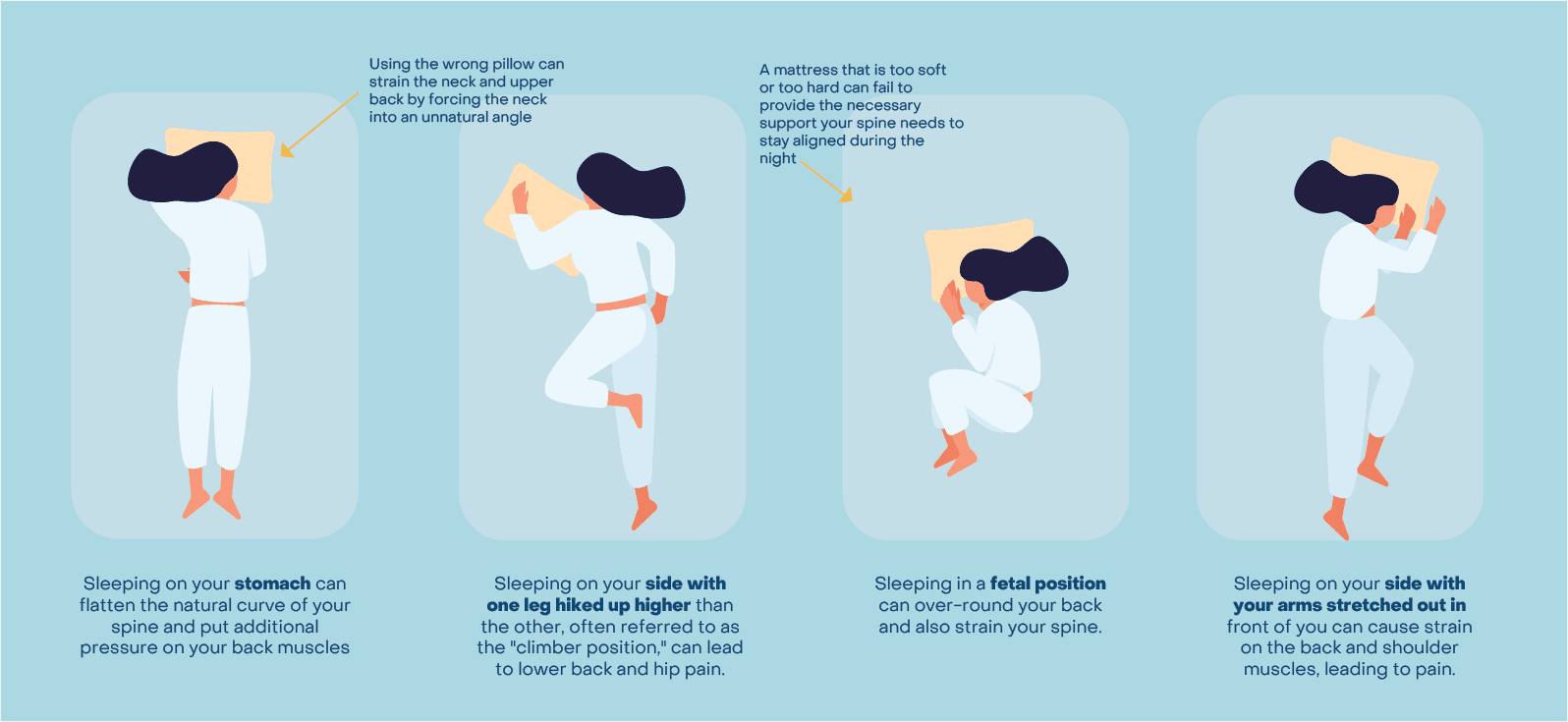
Sleeping on your stomach twists the neck unnaturally. It forces your spine out of alignment. This posture puts pressure on muscles and joints. Breathing may also become shallow. These issues cause stiffness and pain in the morning.
Sleeping On The Back With Poor Support
Lying on your back without proper support strains your lower back. The spine loses its natural curve. This posture can cause pressure points and muscle tension. It often leads to back pain and discomfort after waking up.
Side Sleeping With Misalignment
Side sleeping is healthy only with correct alignment. If your head or hips are not supported, the spine bends unnaturally. This misalignment causes muscle tightness and joint pain. Poor side sleeping posture often results in shoulder and neck aches.
How Poor Posture Affects Your Body
Poor sleep posture can harm your body in many ways. It affects your spine, muscles, and nerves. These problems often cause pain when you wake up.
Understanding how bad posture affects your body can help you avoid morning pain. Let’s explore the main issues.
Spinal Misalignment
Your spine should keep a natural curve while you sleep. Poor posture can bend or twist the spine unnaturally. This misalignment puts pressure on the discs and joints. Over time, it can lead to chronic pain and discomfort.
Pressure Points And Nerve Compression
Bad posture creates pressure points on your body. These spots press against your bed or pillow. Pressure can pinch nerves and reduce blood flow. Nerve compression causes tingling, numbness, or sharp pain in the morning.
Muscle Tension And Stiffness
Sleeping in awkward positions makes your muscles work hard all night. Muscles stay tight and do not relax properly. This tension leads to stiffness and soreness when you wake up. It also limits your movement during the day.
Signs Your Sleep Posture Needs Improvement
Poor sleep posture can lead to discomfort and pain in the morning. Recognizing the signs helps you know when to change how you sleep. These signs show your body is not resting well. Fixing your posture can ease pain and improve sleep quality.
Waking Up With Pain
Waking up with pain is a clear sign of poor sleep posture. Neck, back, or shoulder pain often means your position strains muscles. Pain may be dull or sharp but usually lasts after waking. Persistent pain signals your body needs better support while sleeping.
Frequent Tossing And Turning
Tossing and turning during the night means discomfort. Your body tries to find a comfortable position. This movement interrupts deep sleep and causes tiredness. A good sleep posture helps keep your body stable and relaxed all night.
Numbness Or Tingling Sensations
Numbness or tingling means nerves or blood flow are affected. It happens when pressure builds on certain body parts. You might feel pins and needles in arms or legs. Changing your sleep posture can reduce these uncomfortable sensations.
Simple Fixes For Better Sleep Posture
Poor sleep posture often leads to morning pain and discomfort. Simple changes can improve how you rest. Better sleep posture supports your body and reduces aches. Small adjustments make a big difference in sleep quality.
Choosing The Right Pillow
A good pillow keeps your neck aligned with your spine. It should fill the gap between your head and mattress. Too high or too low causes neck strain. Memory foam or latex pillows offer good support. Replace pillows every 1-2 years for best results.
Selecting A Supportive Mattress
Your mattress should support your body’s natural curves. It should not be too soft or too hard. A medium-firm mattress works well for most people. It helps keep your spine straight during sleep. Test mattresses before buying to find what feels best.
Optimal Sleeping Positions
Sleeping on your back or side reduces pressure on joints. Avoid sleeping on your stomach; it twists your neck. Use a pillow under your knees if on your back. Side sleepers benefit from a pillow between their knees. These positions help keep your spine neutral.
Using Body Pillows And Supports
Body pillows keep your spine aligned during sleep. They provide extra support for your hips and shoulders. Hug a body pillow to reduce strain on your back. Wedge pillows can elevate parts of your body for comfort. Supports help maintain good posture all night long.

Additional Tips To Reduce Morning Pain
Morning pain can make starting the day hard. Poor sleep posture is a common cause. Simple changes help reduce this pain and improve your sleep quality. Try these extra tips to wake up feeling better and ready.
Stretching Before Bed
Stretching relaxes tight muscles and eases tension. Gentle stretches before bed prepare your body for rest. Focus on your neck, shoulders, and back areas. Hold each stretch for 20 seconds without forcing. This habit can reduce stiffness and pain in the morning.
Creating A Relaxing Sleep Environment
A calm bedroom helps your body relax deeply. Keep the room dark and quiet. Use comfortable pillows that support your neck and spine. Maintain a cool temperature to avoid discomfort. These small changes improve your sleep posture naturally and lessen pain.
Maintaining Consistent Sleep Schedule
Going to bed and waking up at the same time helps your body adjust. A regular routine improves sleep quality and reduces muscle strain. Try to get at least 7 to 8 hours of sleep each night. Consistency supports better posture and fewer aches in the morning.
Frequently Asked Questions
How Does Poor Sleep Posture Cause Morning Pain?
Poor sleep posture strains muscles and joints during rest. This leads to stiffness, soreness, and discomfort upon waking. Over time, it can worsen chronic pain and affect sleep quality.
What Are Common Poor Sleep Postures To Avoid?
Sleeping on your stomach or with an unsupported neck often causes pain. These positions misalign your spine and increase pressure on muscles and joints, leading to morning aches.
Can Improving Sleep Posture Reduce Morning Pain?
Yes, aligning your spine and supporting your neck while sleeping helps prevent muscle strain. Good posture promotes better circulation and reduces stiffness, leading to less morning pain and improved rest.
What Pillows Help Maintain Proper Sleep Posture?
Ergonomic pillows that support neck curvature improve spinal alignment. Memory foam or contour pillows cradle your head and neck, reducing pressure and minimizing morning pain caused by poor posture.
Conclusion
Poor sleep posture can lead to pain and discomfort each morning. Small changes in how you lie down can make a big difference. Supporting your neck and back helps avoid stiffness and soreness. Good habits improve sleep quality and reduce pain over time.
Pay attention to your body’s signals while resting. A comfortable position supports healing and energy for the day. Rest well, feel better, and start mornings pain-free.