
As an Amazon Associate I earn from qualifying purchases.
Have you ever wondered why you wake up feeling refreshed some mornings and tired on others? The secret might be in how you sleep.
Your sleep position affects more than just comfort—it can impact your health, mood, and energy levels throughout the day. You’ll discover the main sleep positions and what each one means for your body. Understanding your sleep style could be the key to better rest and a healthier you.
Keep reading to find out which position suits you best and how to improve your sleep starting tonight.
Quick Navigation
Popular Sleep Positions
People sleep in many different positions. Each position affects comfort and health. Understanding popular sleep positions helps improve rest quality. It also guides you to find the best way to sleep.
Back Sleeping
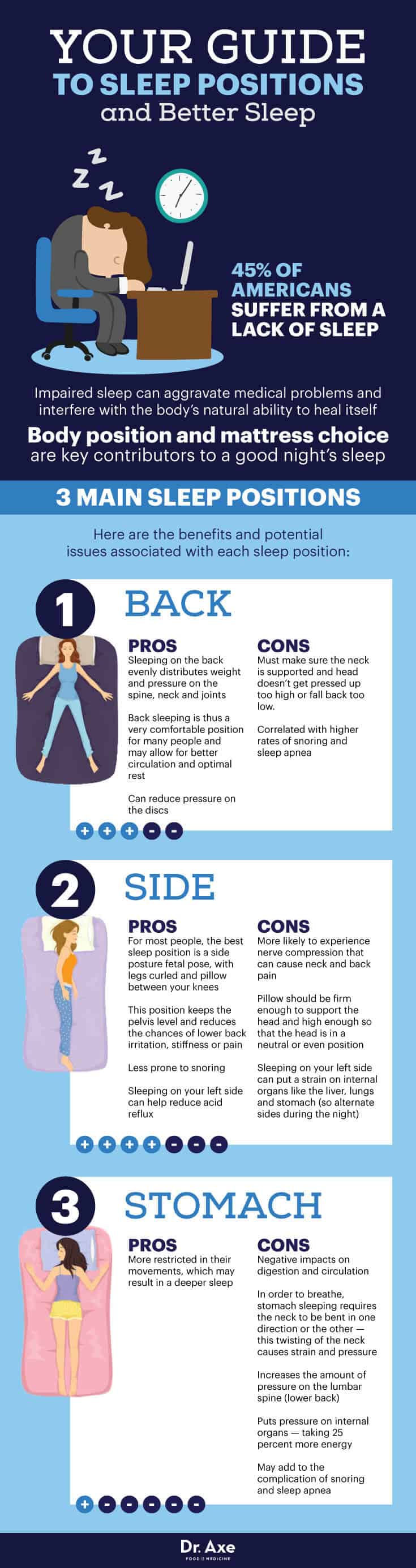
Back sleeping means lying flat on your back. This position keeps your head, neck, and spine aligned. It reduces pressure on joints and muscles. Some people find it helps prevent wrinkles. Back sleeping can reduce acid reflux if the head is slightly raised. It is a good choice for spinal health. Yet, it may worsen snoring or sleep apnea for some.
Side Sleeping
Side sleeping is one of the most common positions. It helps reduce snoring and sleep apnea symptoms. This position also supports spinal alignment well. Sleeping on the left side may improve digestion and heart health. It can reduce acid reflux and heartburn. Side sleeping is good for pregnant women. It may cause shoulder or hip pain if not supported by a good mattress.
Stomach Sleeping
Stomach sleeping means lying flat on your belly. It can reduce snoring but may strain the neck. This position may cause back pain because the spine is not aligned. Stomach sleeping puts pressure on muscles and joints. It can lead to numbness or tingling in arms. People who sleep on their stomach often find it hard to keep their head neutral. This position is less recommended by health experts.
Fetal Position
The fetal position means curling up on your side with knees drawn close. It is common and feels cozy for many. This position can ease lower back pain. It may also help reduce snoring. Pregnant women often prefer the fetal position. It can restrict deep breathing if curled too tightly. Using a pillow between knees can improve comfort in this position.
Benefits Of Each Position
Each sleep position offers unique benefits for your body and mind. Choosing the right position can improve your rest and health. Understanding these benefits helps you find the best sleep style for you.
Let’s explore the advantages of the main sleep positions and see how they support your well-being.
Back Sleeping Advantages
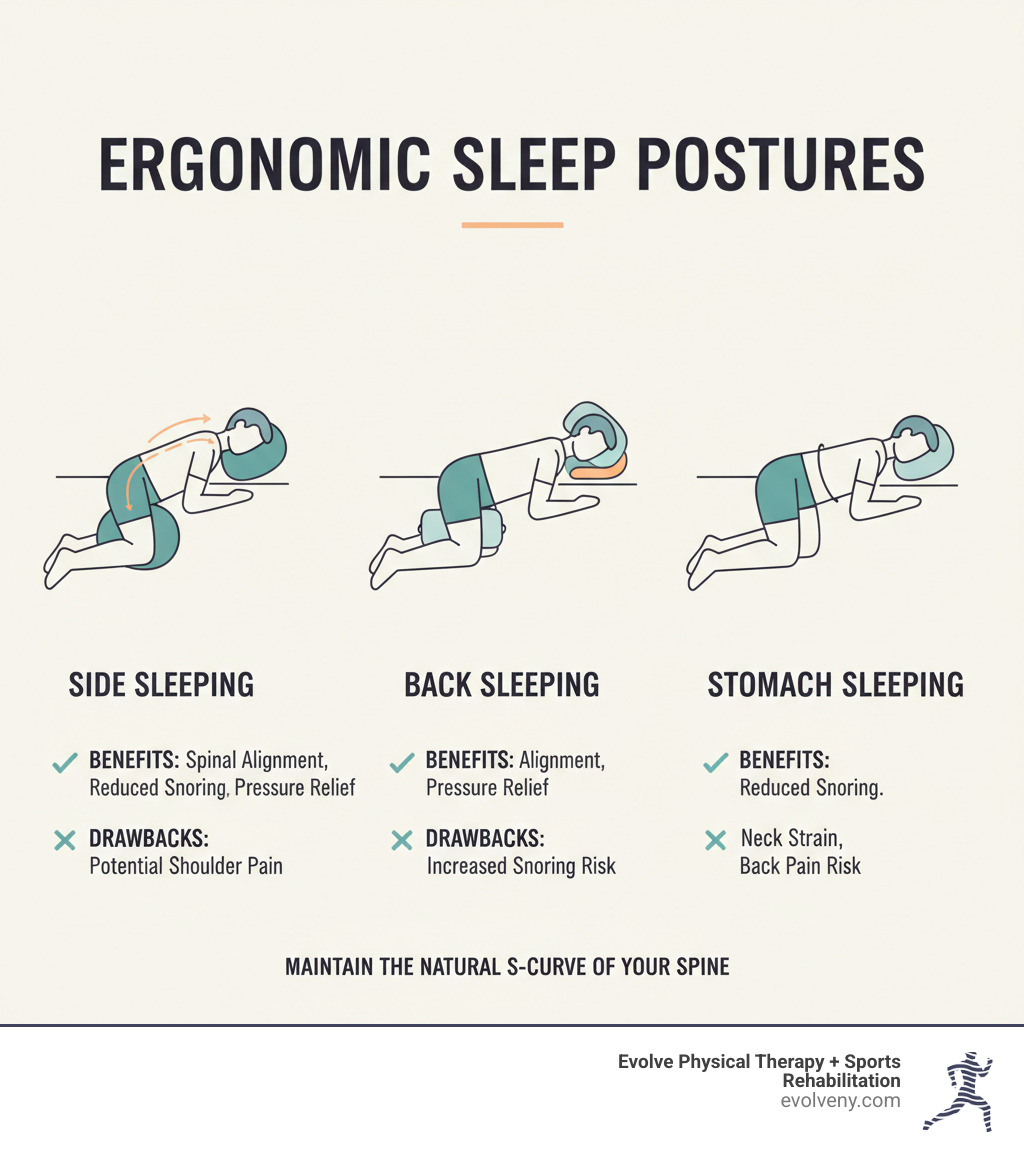
Sleeping on your back keeps your spine straight. It reduces pressure on your joints and muscles. This position helps prevent neck and back pain. It also lowers acid reflux by keeping your head elevated. Your face stays free from wrinkles and skin irritation. Back sleeping allows your head, neck, and spine to rest in a neutral position.
Side Sleeping Benefits
Side sleeping improves breathing and reduces snoring. It is great for people with sleep apnea. This position supports spinal alignment and reduces back pain. It helps digestion by easing acid reflux symptoms. Sleeping on the left side may improve heart health. Side sleeping is often best for pregnant women, offering comfort and safety.
Stomach Sleeping Pros
Sleeping on your stomach can reduce snoring. It helps keep your airways open in some cases. This position may ease sleep apnea for certain people. Stomach sleeping can feel comforting and secure. It may reduce sleep paralysis episodes. However, it can strain your neck and back, so use caution.
Fetal Position Perks
The fetal position is a curled side sleep. It offers a sense of safety and warmth. This position helps reduce snoring and improves breathing. It is gentle on the back and hips. The fetal position is often the most common and natural sleep pose. It supports spinal health and reduces lower back pain.
Drawbacks To Consider
Each sleep position has its own drawbacks to consider. Choosing the right position affects comfort and health. Knowing the risks helps you make better sleep choices.
Back Sleeping Risks
Sleeping on your back can cause snoring and breathing problems. It may worsen sleep apnea. This position puts pressure on the spine, causing lower back pain. Some find it hard to stay comfortable all night.
Side Sleeping Challenges
Side sleeping can cause shoulder and hip pain. It may lead to wrinkles on the face over time. Some people feel numbness in arms or hands. It can also cause jaw discomfort if the neck is not aligned.
Stomach Sleeping Issues
Stomach sleeping strains the neck and spine. It forces the head to turn, causing neck pain. This position can cause numbness or tingling in limbs. It also puts pressure on the lungs and muscles.
Fetal Position Limitations
The fetal position can limit deep breathing due to curling up. It may cause joint stiffness and aches in the morning. This position might increase wrinkles on the face. It may also reduce spinal alignment if curled tightly.
How Sleep Positions Affect Health
Sleep positions play a big role in health. How you sleep affects your body in many ways. Choosing the right position can help your body heal and rest better. The wrong position may cause pain or other problems. Understanding these effects helps you make better choices for good sleep and health.
Impact On Spine And Posture
Sleeping posture shapes how your spine aligns. A good position keeps the spine straight and balanced. This reduces the risk of back and neck pain. Poor positions can cause strain and stiffness. Over time, this may lead to poor posture and discomfort.
Effects On Breathing
Sleep position affects how well you breathe. Sleeping on your back can block airways and cause snoring. Side sleeping often improves airflow and reduces breathing issues. Proper breathing during sleep supports oxygen flow to the body. This helps you feel refreshed and alert in the morning.
Influence On Digestion
How you lie down impacts digestion. Sleeping on the left side can help food move smoothly through the stomach. It may reduce acid reflux and heartburn. Sleeping on the right side might increase these problems. A good sleep position supports healthy digestion and comfort.
Connection To Sleep Quality
Your sleep position affects how well you rest. Comfortable positions help you fall asleep faster. They also reduce tossing and turning at night. Poor positions can cause pain, leading to waking up often. Quality sleep improves mood, energy, and overall health.
Tips For Finding Your Best Position
Finding the best sleep position can improve rest and reduce pain. It takes time and small changes. Try different ways to see what feels right. Comfort matters most. Pay attention to your body’s signals.
Adjusting For Comfort
Start by noticing how your body feels in each position. Move slowly and make small shifts. Adjust your arms and legs to reduce pressure. Keep your spine straight for better support. Stop if you feel pain or stiffness.
Using Pillows Effectively
Pillows help support your body. Place one under your neck for head support. Put a pillow between your knees if you lie on your side. Use a pillow under your knees when on your back. Pillows reduce strain and improve comfort.
Considering Medical Conditions
Some health issues need special care. People with acid reflux should sleep on their left side. Back pain may get better with a pillow under the knees. Pregnant women should avoid sleeping on their backs. Always follow advice from your doctor.
Experimenting With Positions
Try different sleep positions over several nights. Change one thing at a time. Give your body time to adjust. Notice which position helps you feel rested and pain-free. Keep a sleep journal to track what works best.
When To Change Your Sleep Position
Changing your sleep position can improve your rest and overall health. Some positions cause discomfort or poor sleep quality. It is important to notice signs that suggest a change is needed. Listening to your body helps you find the best sleep posture.
Signs Of Poor Rest
Waking up tired often means your sleep position is not good. Feeling sleepy during the day shows poor sleep quality. Tossing and turning all night is another sign. These problems suggest your body is not comfortable while sleeping.
Pain And Discomfort Alerts
Neck or back pain after waking up points to wrong sleep posture. Numbness or tingling in your arms or legs can happen too. Shoulder pain might mean you sleep on the same side every night. These aches tell you to try a new position.
Doctor Recommendations
Doctors may suggest changing sleep position for health reasons. People with sleep apnea often need to avoid sleeping on their back. Pregnant women get advice to sleep on their left side. Follow medical advice to protect your health during sleep.
Adapting To Life Changes
Life changes can require new sleep habits. Pregnancy, injury, or surgery may make old positions painful. Aging can change your comfort needs too. Adjust your sleep position to fit your current body needs.

Frequently Asked Questions
What Are The Most Common Sleep Positions?
The most common sleep positions include back sleeping, side sleeping, and stomach sleeping. Each affects comfort and health differently. Knowing these helps improve sleep quality and reduce pain.
How Does Sleeping Position Affect Health?
Sleep positions influence breathing, spinal alignment, and digestion. For example, side sleeping can reduce snoring. Back sleeping supports the spine. Poor positions may cause discomfort or health issues.
Which Sleep Position Reduces Back Pain Best?
Sleeping on your side with a pillow between knees often reduces back pain. This position keeps the spine aligned and relieves pressure. Back sleeping may also help if done with proper support.
Can Sleep Position Improve Breathing And Reduce Snoring?
Yes, sleeping on your side can improve breathing and reduce snoring. It prevents the tongue from blocking the airway. Back sleeping often worsens snoring by restricting airflow.
Conclusion
Choosing the right sleep position affects your comfort and health. Side, back, and stomach are the main types. Each has its own benefits and challenges. Try different positions to find what feels best for you. Good sleep helps your body and mind.
Pay attention to how you sleep tonight. Small changes can improve your rest a lot. Sleep well, feel better every day.